Last month, I launched a side project called SRQ Weekly—a newsletter and website highlighting the best events happening in Sarasota, FL. And the entire project took one week to build.
The idea came from a simple problem: my wife and I have a young son, and we kept finding ourselves searching for family-friendly things to do around Sarasota.
However, event listings were scattered all over the place and most of the calendars that did exist were full of junk. We figured if we had this problem, other people probably did too.
But here’s the thing… I’m not a developer. In the past, a project like this would have required either learning to code, hiring someone, or settling for something manual and generic. None of those options made sense for a side project with uncertain revenue.
What made me actually pull the trigger was wanting to push myself with Claude Code to see what I could build on my own.
SRQ Weekly became the test case.
Why This Project Wouldn’t Have Made Sense Before
Part of the value with SRQ Weekly is curation. Now that we’ve been here for 5 years, I feel like my wife and I know Sarasota pretty well. We know which events are actually worth attending and which are filler. We know what locals care about versus what’s just noise on the calendar.
But curation is only half the equation. The other half is presentation—taking that curated information and packaging it into something people actually want to read.
And that’s where the math never worked.
Formatting a newsletter with event data like dates, times, locations, and descriptions is tedious. Doing it manually every week for a side project? Definitely not sustainable.
And even if I was willing to do it manually, SRQ Weekly would look just like every other Beehiiv newsletter and it wouldn’t have a proper web component to it.
The alternative was hiring a developer. But this is a passion project with uncertain revenue. There’s no way I’m dropping thousands of dollars on custom development for something that might only make a few hundred bucks a month, or nothing at all.
What Changed
AI changed the economics entirely.
With Claude Code, I was able to build the infrastructure myself. Not “no-code tools” infrastructure—actual custom functionality tailored to exactly what I needed.
Here’s what I built over the span of a week:
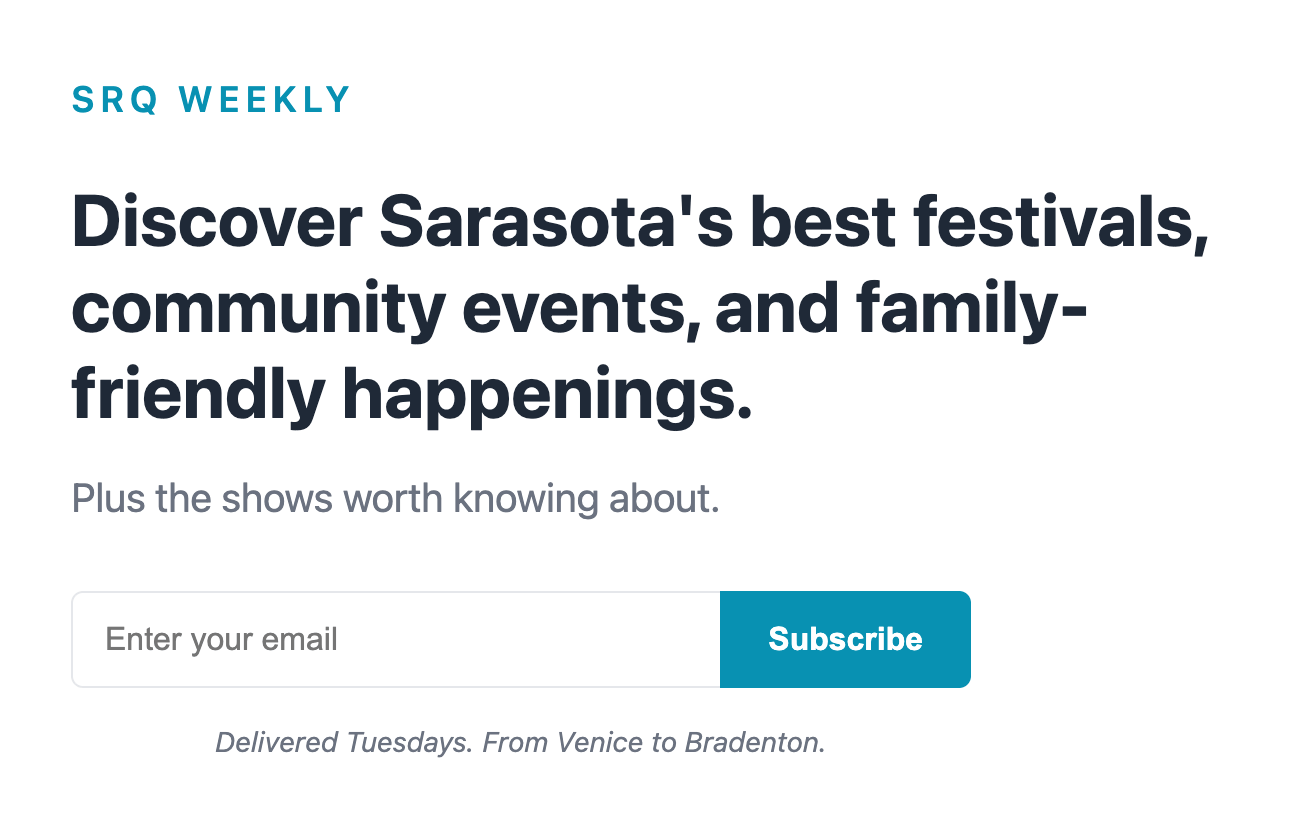
A full website with a custom landing page to drive newsletter subscribers. Not a generic template, but a designed page that matches the brand and vibe I was going for.
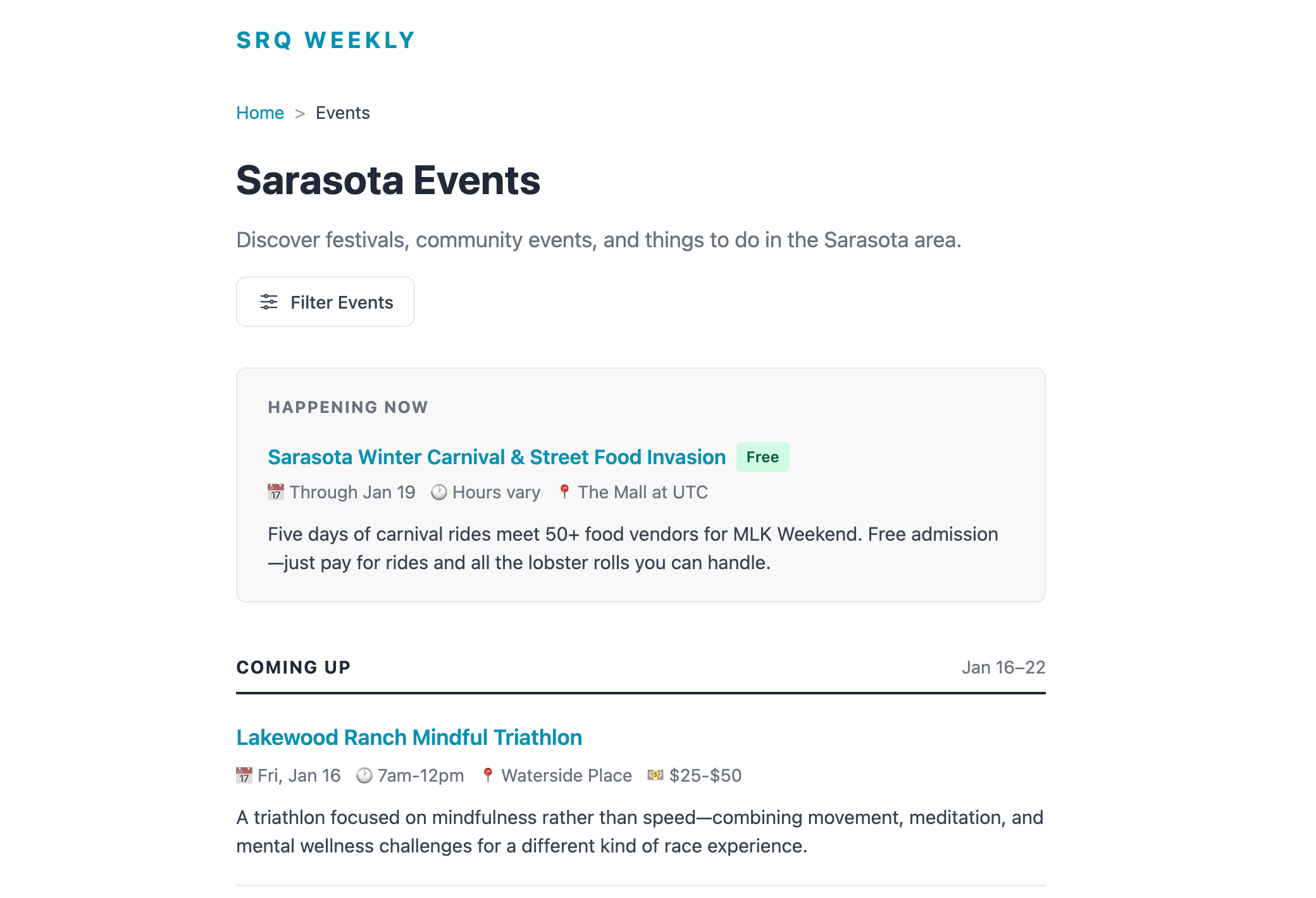
A browsable events page where visitors can filter by date, toggle free events only, and explore what’s coming up across the Sarasota area. It’s basically a local events directory that stays current because it pulls from the same data that powers the newsletter.
An internal dashboard that makes compiling each newsletter a breeze. I simply confirm the events I want to include, and the dashboard handles the rest.
Automatic categorization that pulls in events for the selected time period and assigns them to the right section: Featured Events, More This Week, Last Chance, etc.
AI-assisted summaries that help me refine event descriptions based on my editorial notes.
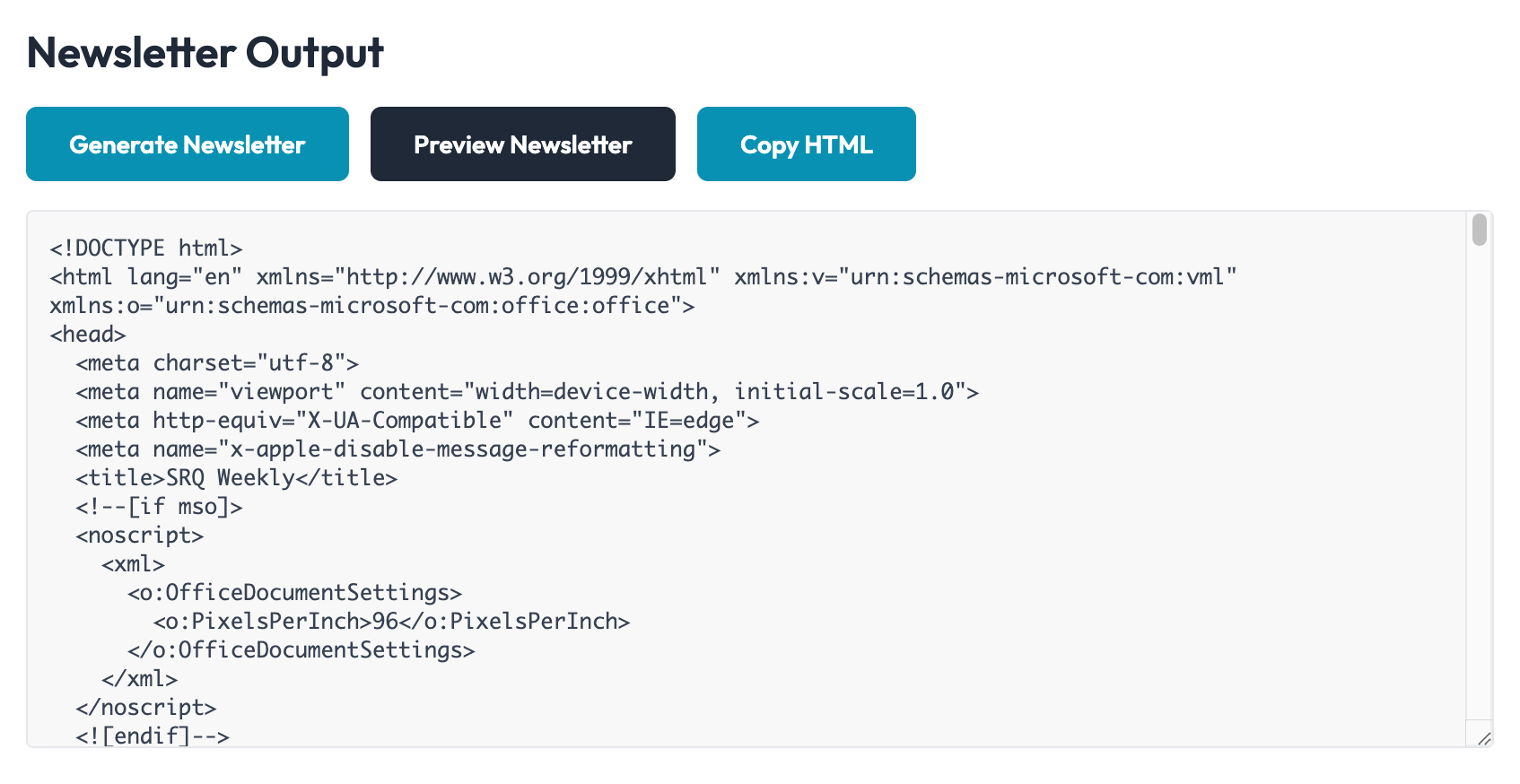
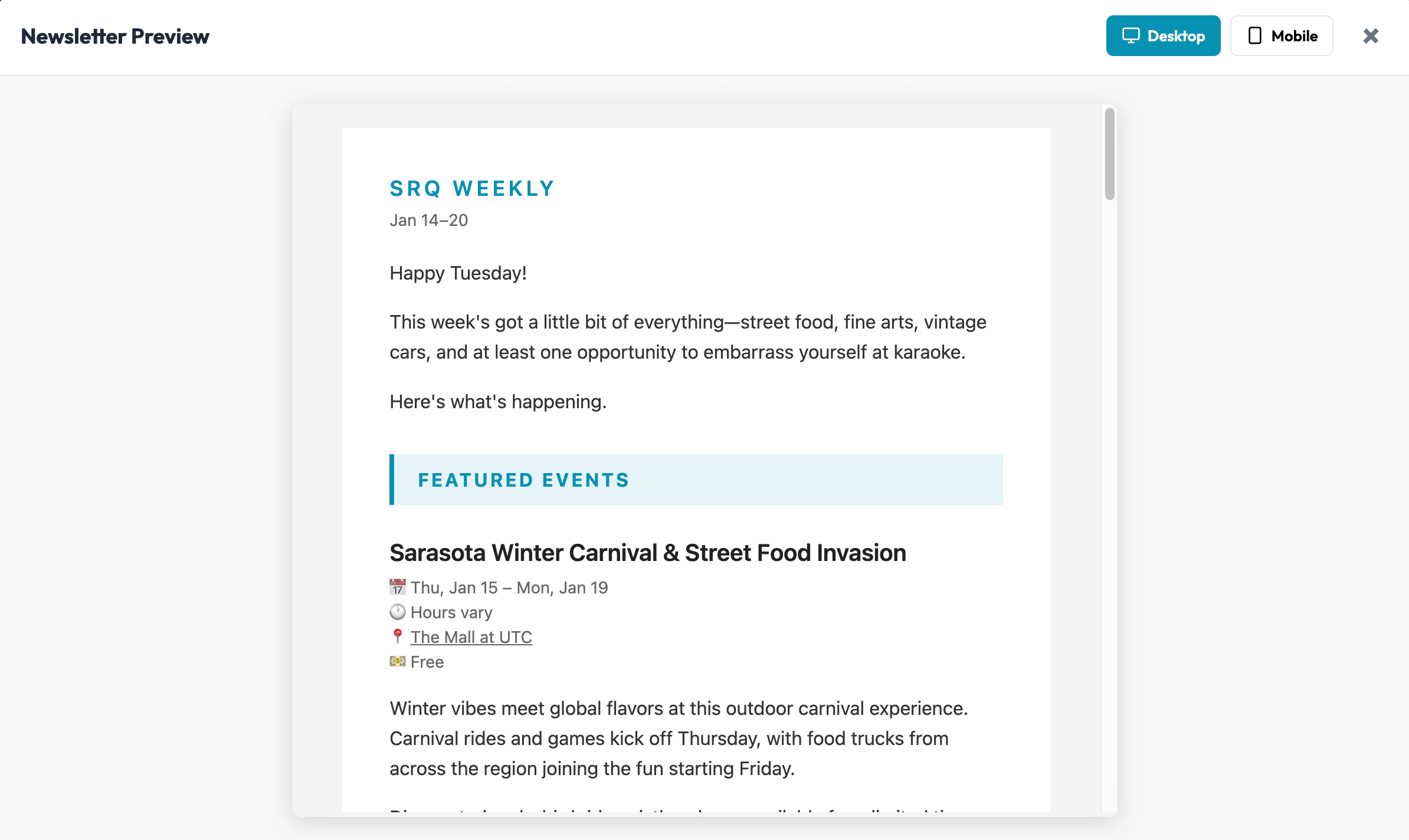
A “generate newsletter” button that takes all the event data—plus my intro and outro—and formats it into clean HTML I can paste directly into MailerLite. The system even handles the small stuff, like checking character counts for event details and splitting them across multiple lines so everything looks good on mobile.
But the real game-changer is the custom event scraper.
Using Claude Code, I built a scraper that automatically pulls events from all the sources I’ve added. New events land in a “Pending” section of the dashboard with all the event data pre-populated—date, time, location, description. I can edit if needed, then approve with a click. I can also set rules and filters to permanently skip certain types of events (goodbye, recurring happy hours).
The scraper means I’ve gone from manually hunting for events and entering data to simply reviewing what’s already been collected. And I can keep refining the scraper over time as I add new sources or fine-tune the filters.
Obviously, we’re not capturing everything with the scraper, but it’s probably capturing 90-95% of the events right now. Then once a week my wife will scour Facebook and some of the groups she’s part of to make sure we didn’t miss anything crucial.
The best part about this? I didn’t need any paid scraping tools. I built the whole thing with Claude Code.
The Branding Surprise
Here’s something I didn’t expect: AI was genuinely useful for branding.
I’m not a graphic designer and I barely know my way around Illustrator. But I know what I like when I see it.
I described the vibe I was going for to Claude, and it generated a color palette, a logo concept, and a brand kit that I actually liked.
This is the kind of work I would have paid a graphic designer hundreds (or thousands) of dollars for and waited weeks to receive. Instead, I did most of it on my phone, on the go, in spare moments.
Here’s the thing: I think I have taste, even if I don’t have the design skills. But AI bridges that gap. I can prompt, evaluate, and iterate. I asked Claude to generate multiple variations of everything and narrowed down what worked.
The output isn’t AI-generated slop, it’s the result of a back-and-forth where I was steering toward something specific.
Where Humans Still Matter
Let me be clear about what AI can’t do.
The reason SRQ Weekly is valuable is because we know what to include. Some people have no idea these events even exist while others are drowning in event listings.
Knowing what matters requires local knowledge. It requires taste and judgment. An AI can’t look at a list of 50 events and know which 12 are actually worth checking out (yet).
That’s the work my wife and I do. We’re the filter. We know which events are worth going to and which ones are business promotions disguised as events.
The scraper pulls in everything. We decide what makes the cut.
AI handles the presentation layer—the formatting, the design, the automation, the data collection. We handle the curation layer—the part that actually makes the newsletter worth reading.
This is the arrangement that makes the whole thing work. Without AI, I’d be stuck doing tedious formatting and data entry, leaving little time for the high-value stuff. With AI, I can focus entirely on the thing that only a human can do.
What This Means
I’ve been building bootstrapped businesses for a long time. I know how to evaluate whether something is worth building. The calculus is simple: is the effort required worth the potential return?
Up to this point, that calculus has depended heavily on technical ability and resources. If I couldn’t code it myself, I needed to hire someone who could, or find a co-founder. That meant the threshold for “worth building” was much higher. Side projects with uncertain revenue? Usually not worth it.
AI changes that threshold dramatically.
SRQ Weekly is a passion project. It might make decent money eventually. It might not. But here’s what matters: it exists, it’s good, and the workflow is sustainable. I built something custom and I can keep improving it over time.
Without AI, I probably would have talked myself out of this since the math wouldn’t have worked.
But now it does.